Saturday, September 9, 2023

Alciato: Inanis Impetus

This is a poem intended for my anthology of Latin Aesopic poetry. I'm accumulating the materials for the anthology in a Google Docs folder, including a document for this poem where you will find vocabulary and notes. Comments, questions, and suggestions are welcome! You can use the "comment" feature in the Google Doc, which I will be updating with revisions. Today's poem is by Andrea Alciato.

Inanis Impetus

Lunarem noctu, ut speculum, canis inspicit orbem,
Seque videns, alium credit inesse canem,
Et latrat, sed frustra: agitur vox irrita ventis,
Et peragit cursus surda Diana suos.

The goddess Diana is associated with the moon, while her brother, Apollo, is associated with the sun. Here is the emblem:


Here is the poem written out in English prose order to help in reading:

noctu
canis inspicit
lunarem orbem, 
ut speculum,
et, 
videns se, 
credit 
alium canem inesse,
et latrat,
sed frustra:
vox agitur ventis, 
irrita,
et Diana, surda,
peragit suos cursus.

And here's the meter marked:

Luna·rem noct~ · ut specu·lum, canis · inspicit · orbem,
Seque vi·dens, ali·um || credit in·esse ca·nem,
Et la·trat sed · frustr~ agi·tur vox · irrita · ventis,
Et pera·git cur·sus || surda Di·ana su·os.

Meanwhile, for more, here are the other elegiac poems I've posted so far here at the blog. :-)

Thursday, September 7, 2023

Alciato: Alius Peccat, Alius Plectitur

This is a poem intended for my anthology of Latin Aesopic poetry. I'm accumulating the materials for the anthology in a Google Docs folder, including a document for this poem where you will find vocabulary and notes. Comments, questions, and suggestions are welcome! You can use the "comment" feature in the Google Doc, which I will be updating with revisions. Today's poem is by Andrea Alciato (1492-1550).

Alius Peccat, Alius Plectitur

Arripit ut lapidem catulus morsuque fatigat,
Nec percussori mutua damna facit,
Sic plerique sinunt veros elabier hostes,
Et, quos nulla gravat noxia, dente petunt.

There is an Aesop's fable that expresses a similar idea: when a thief steals the bees' honey, the bees attack the beekeeper, who then rebukes them for attacking him instead of the one who actually took the honey: The Beekeeper (Perry 72). In Alciato's emblem, the stone is silent: it cannot rebuke the dog for biting the stone instead of attacking the one who threw it.

Here is the poem written out in English prose order to help in reading:

ut catulus 
arripit lapidem
et fatigat morsu
nec facit mutua damna
percussori,
sic plerique 
sinunt veros hostes elabier,
et petunt dente
quos 
nulla noxia gravat.

And here's the meter marked:

Arripit · ut lapi·dem catu·lus, mor·suque fa·tigat,
Nec per·cussori || mutua · damna · facit.
Sic ple·rique si·nunt ve·ros e·labier · hostes,
Et quos · nulla gra·vat || noxia · dente pe·tunt.

You can find illustrations for the emblem at the Glasgow site.


Meanwhile, for more, here are the other Anthology poems I've posted so far here at the blog. :-)


Tuesday, September 5, 2023

Clarke: Latin (9)

Here are some fables from Clarke's Fabulae Aesopi Selectae, or, Select Fables of Aesop. You can click here for all the Clarke fables at this blog. 

This link takes you to the Latin and English texts side by side for this section.

I'm recording this audio for LibriVox; for now, here is the audio as hosted at SoundCloud: Clarke playlist.


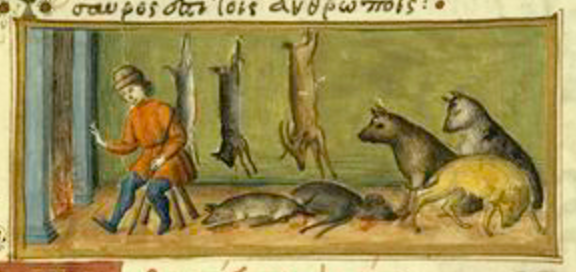
41. De Agricola et Canibus
Agricola,
cum hiemasset in ruri
multos dies,
coepit tandem
laborare penuria
necessariarum rerum.
Interfecit oves, 
deinde
et capellas, 
postremo
quoque mactat boves
ut habeat
quo
sustentet corpusculum
paene exhaustum inedia.
Canes,
videntes id,
constituunt
quaerere salutem
fuga,
etenim
sese
non victuros diutius
quando herus
non pepercit bobus quidem,
quorum opera
utebatur
in faciendo rustico opere.
Morale.
Si vis esse salvus,
decede ab eo cito
quem vides
redactum ad eas angustias
ut consumat instrumenta
necessaria suis operibus
quo suppleatur
praesenti inediae.


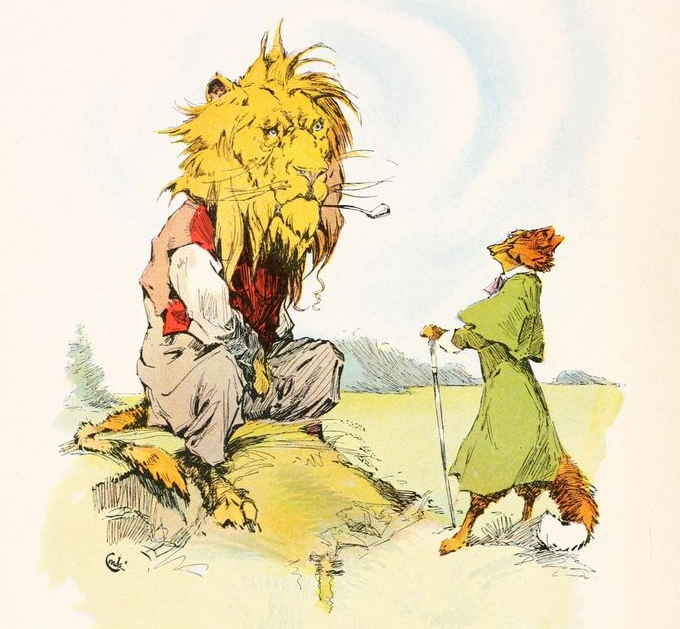
42. De Vulpe et Leone
Vulpecula,
quae
non solebat
videre immanitatem leonis,
contemplata id animal
semel atque iterum,
trepidabat et fugitabat.
Cum jam tertio
leo 
obtulisset sese
obviam,
vulpes
non metuit quicquam,
sed
confidenter adit
et salutat illum.
Morale.
Consuetudo
facit nos omnes
audaciores,
vel apud eos
quos
vix antea 
ausi fuimus aspicere.


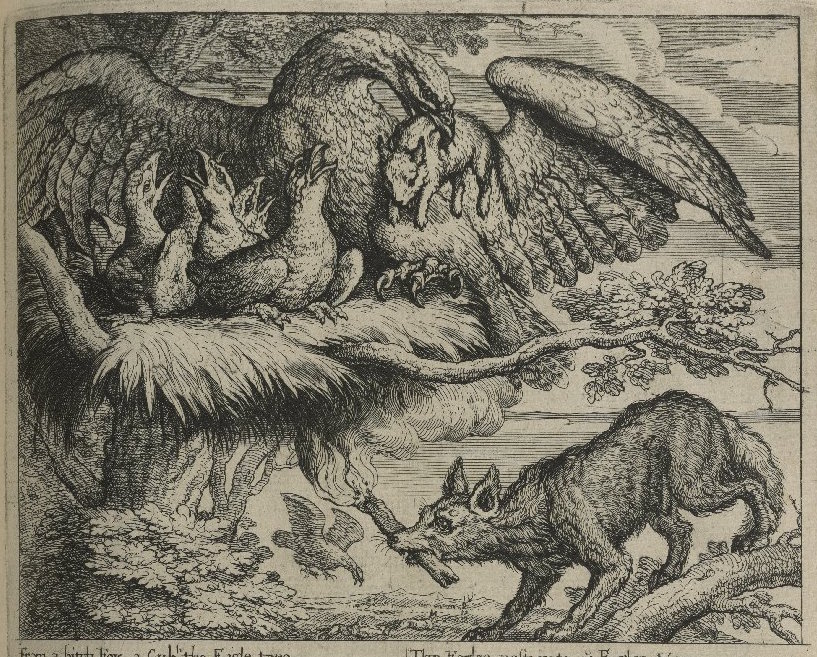
43. De Vulpe et Aquila
Proles vulpeculae
excurrebat foras;
comprehensa ab aquila
implorat fidem matris.
Illa accurrit,
rogat aquilam
ut dimittat captivam prolem.
Aquila,
nacta praedam,
subvolat ad pullos.
Vulpes,
face correpta,
quasi
esset absumptura munitiones
incendio,
cum jam ascendisset arborem,
inquit,
"Nunc tuere te tuosque,
si potes."
Aquila, trepidans,
dum metuit incendium,
inquit,
"Parce mihi;
reddam
quicquid habeo tuum."
Morale.
Intellige per aquilam
potentes atque audaces;
per vulpem
pauperculos,
quos
divites saepenumero opprimunt
per vim.
Verum
laesi
interdum probe ulciscuntur
iniuriam acceptam.


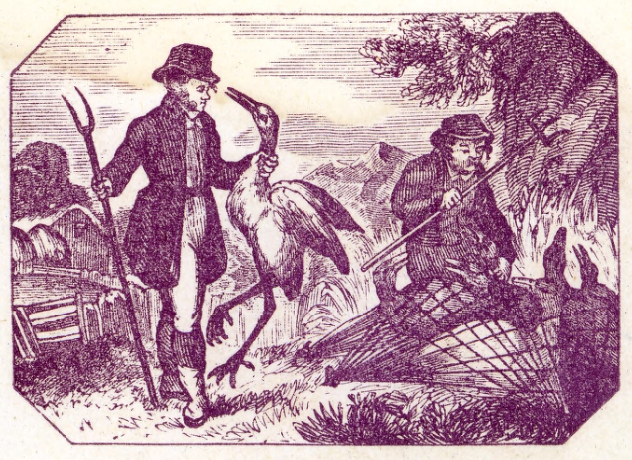
44. De Agricola et Ciconia
Gruibus anseribusque
depascentibus sata,
rusticus 
praetendit laqueum.
Grues capiuntur,
anseres capiuntur,
et ciconia capitur.
Illa supplicat,
clamitans
sese innocentem,
et esse
nec gruem, nec anserem,
sed optimam omnium avium,
quippe
quae semper consueverit
inservire parenti sedulo
et alere eum
confectum senio.
Agricola inquit, 
"Probe scio
omnia haec;
verum
postquam cepimus te
cum nocentibus,
morieris quoque
cum eis."
Morale.
Qui
committit crimen,
et is,
qui adjungit se
socium sceleratis,
plectuntur pari poena.


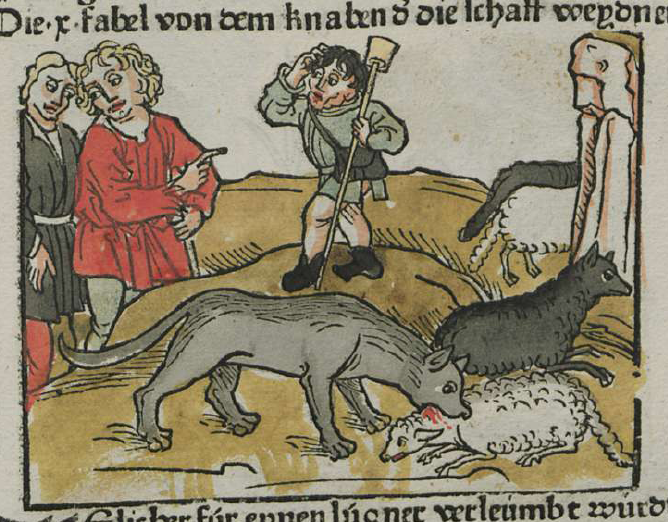
45. De Opilione et Agricolis
Puer 
pascebat oves
editiore pratulo,
atque,
clamitans
terque quaterque per jocum
lupum adesse,
exciebat agricolas undique.
Illi,
illusi saepius,
dum non subveniunt
imploranti auxilium,
oves fiunt
praeda lupo.
Morale.
Si quispiam
consueverit mentiri,
fides
non habebitur facile ei,
cum occeperit narrare verum.